
Hands lead, brain follows: clay, matrescence, and the evidence for arts and mental health
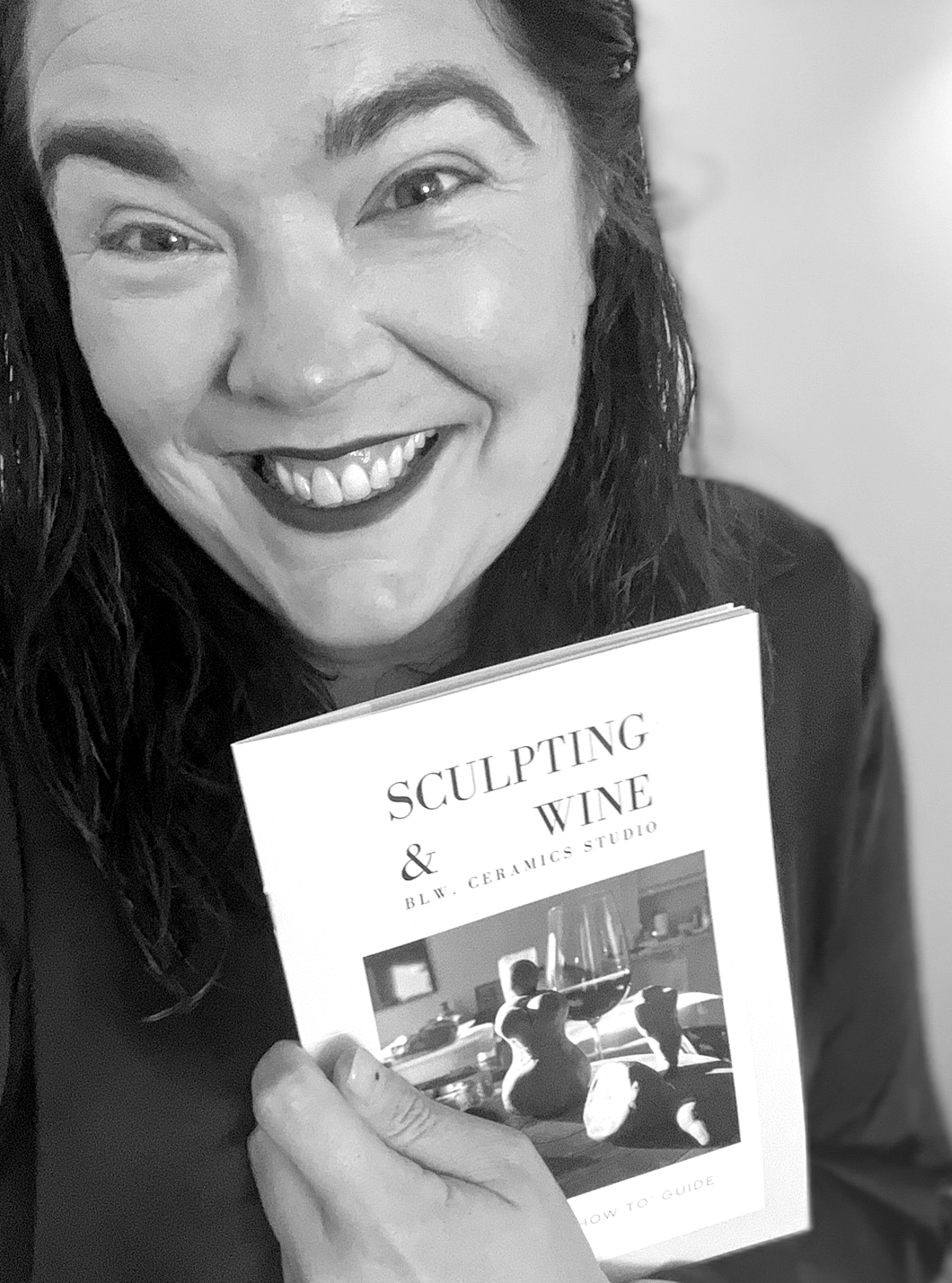
I got a C in GCSE Art.
I bring that up because for a long time it was the headline I told myself about my creative life. I tried to pursue a career in the arts professionally a few times in my twenties and got pushed back, gently, the way people do when they think they're being kind. Not quite the right grades or experience. Not quite the right person? I picked up the message I think a lot of people pick up: you're not good enough, do something else. So I built a marketing career instead. I kept art as a hobby: theatre, galleries, travel, foodie experiences, pottery classes, anything I could engage in that lit up my soul.
It's taken me until now — a few years into motherhood, a year being free from post-natal psychosis and depression, post-redundancy, post-three-surgeries on a badly broken leg (plot twist of 2026) to understand that the C wasn't the headline. The headline was that I kept the fire to create and to experience art. No matter what else was going on. This is what matters.
And it turns out the evidence agrees.
Science has caught up with what a lot of us already knew
In 2019, the World Health Organization published a scoping review by Professor Daisy Fancourt and Saoirse Finn that synthesised over 3,000 studies on the arts and health. The conclusion was unambiguous: the arts play a major role in preventing illness, promoting health, and supporting treatment across the entire human lifespan. It became one of the most-downloaded WHO publications ever.
Fancourt's 2026 book Art Cure (which I’ve just started reading and HIGHLY recommend) puts it bluntly: “If the arts were a pill, we would be taking it every single day.”
A 2019 study using English Longitudinal Study of Ageing data found that people who engaged with the arts monthly — going to museums, theatre, cinema — had nearly half the risk of developing depression over the following decade. Half. Compare that to almost any other lifestyle intervention and it's an extraordinary number.
And for new mothers specifically, a 2023 meta-analysis of randomised controlled trials in Frontiers in Psychiatry concluded that art-based interventions can be effective in alleviating anxiety and depression in pregnancy and the postpartum period. A 2025 systematic review in Current Psychology, focused entirely on arts-based interventions for maternal wellbeing, made the public health case in financial terms: one in seven maternal deaths in the UK is by suicide; perinatal mental health costs the country £8.1 billion per annual cohort of births. Arts programmes offer, in their words, a positive social return on investment and a lower-cost alternative to clinical-only models of care.
This isn't fringe anymore. Gloucestershire GPs refer patients to Arts on Prescription. Social prescribing schemes now operate in over 40 countries. The WHO has a Collaborating Centre for Arts and Health. SEL Mind, where I trained and volunteer, runs Maternal Journal and Mindful Mums precisely because they understand that creativity is a maternal mental health intervention, not a luxury bolt-on.
I have to be careful here. I'm not a doctor. Or an academic. I’m a service user, I have lived experience and I take medication for my mental health. So, I’m not going to pretend a pottery workshop replaces a psychiatrist. But the evidence is now overwhelming that the arts belong alongside these other things for our overall wellbeing — therapy, medication, sleep, movement, community — and for me personally, they're the thread that has held all of it together.
Matrescence: a kick to the nervous system
In 1975, the anthropologist Dana Raphael coined a word for the developmental transition into motherhood: matrescence. She described it as a rite of passage in which a woman's physical state, social status, emotional life, and daily focus all change at once. Like adolescence, but compressed into months instead of years, and almost entirely unsupported by the culture around it.
The word lay quiet for forty years. In 2017, the reproductive psychiatrist Dr Alexandra Sacks wrote a New York Times piece called The Birth of a Mother that brought it into popular use. In 2023, the science journalist Lucy Jones published Matrescence — part memoir, part biology, part social critique — and named what a lot of us had been feeling and couldn't articulate.
“Everyone knows adolescents are uncomfortable and awkward because they are going through extreme mental and bodily changes, but, when they have a baby, women are expected to transition with ease — to breeze into a completely new self, a new role, at one of the most perilous and sensitive times in the life course.” — Lucy Jones, Matrescence
That landed for me. So did this:
“I thought early motherhood would be gentle, beatific, pacific, tranquil: bathed in a soft light. But actually it was hard-core, edgy, gnarly.”
And this, which I think about often:
“Being told to ‘enjoy every minute,’ while undertaking such psychologically and physically demanding work, is a peculiar type of societal gaslighting.”
One of the things matrescence asked me to learn was how to hold two opposing thoughts at the same time without it breaking me. I love my child fiercely, and I grieve who I used to be. I am proud of my wor,k and I have lost confidence in it. I am at home in my body, and my body has been rebuilt by surgeons. New motherhood asks you to live inside that contradiction more or less constantly, and the culture mostly responds by telling you to be grateful.
This is where art quietly does something I haven't found anywhere else.
Hooray for clay
Lucy Jones writes about how new motherhood drags you, often against your will, into a state of immediate sensory presence. Your baby needs you here, now, “with the shape of the water as it is being poured, the opalescence of a bubble, the bumblebee's spun-sugar legs walking across your palm”. She describes falling in love with the world again through her children's eyes.
Clay does the same thing, but for you.
When your hands are in clay, you cannot also be in your inbox. You cannot rehearse the conversation you should have had with your boss. You cannot doomscroll. The material is too unforgiving and too generous at once: it slumps if you ignore it, it cracks if you rush it, and it rewards you the moment you slow down. Your hands take the lead, and your brain, finally, gets to be the passenger.
It is the most reliable off-switch I have found for the maternal mental load. Or any mental load for that matter.
Last month, I led a ceramics workshop for the staff and volunteers at SEL Mind during Maternal Mental Health Awareness Week. We made female-body-shaped trinket dishes for an hour. Ten people who walk alongside new mothers professionally, doing one of the heaviest jobs there is. Within fifteen minutes, the room had changed energy. People stopped apologising for not knowing what they were doing. They stopped narrating what they were making. They went quiet, in the good way - the way a room goes quiet when the nervous system has finally been permitted to switch off the high alert signals.
That hour was the entire thesis of my work in one room. You don't need to be good at it. You don't need a portfolio. You don't need to make anything you'd put on a shelf. You need an hour where your hands lead, and your brain is allowed to rest. Anything else is a bonus.
Coming back to my practise
I came back to my own ceramics practice slowly, in the messy convergence of redundancy, a leg I'm still learning to trust, a marketing business I’m no longer giving the best of me to, and a baby who needed someone present. I am building BLW. Studio Ceramics Workshops around the kind of space I wished had existed for me: drop-in, no commitment, no skill required, no grade at the end.
If you got a C in art. If you were told quietly that you weren't quite good enough. If you're in matrescence, or recovering from something, or just tired to the bones - I built these workshops for you. The skill is a bonus. Joy is the point.
You can find more information about the workshops at blwceramics.studio/workshops. We’re in the process of securing venues for regular workshops for mums, and I will be launching Sculpting & Wine again for everyone over the summer.
If you are not yet ready to come and make something, that's also fine. Read Lucy Jones. Listen to Daisy Fancourt's interviews. Start taking notice of the times you feel the most calm. What are your hands doing?
The evidence isn't telling us anything new. It's just finally telling us, loudly, what we have always quietly known.
— Beth (BLW.)
A short reading list
Lucy Jones, Matrescence: On the Metamorphosis of Pregnancy, Childbirth and Motherhood (Allen Lane, 2023)
Daisy Fancourt, Art Cure: The Science of How the Arts Transform Our Health (Cornerstone Press, 2026)
Fancourt & Finn, What is the evidence on the role of the arts in improving health and well-being? A scoping review (WHO, 2019)
Alexandra Sacks, ‘The Birth of a Mother’ (The New York Times, 8 May 2017)
Adrienne Rich, Of Woman Born: Motherhood as Experience and Institution (W. W. Norton, 1976)
Hollie McNish, Nobody Told Me: Poetry and Parenthood (Blackfriars, 2016)
SEL Mind — Maternal Journal and Mindful Mums programmes

Comments